
News & Commentary

Ending Indefinite Solitary Confinement for the Vast Majority of People with Death Sentences in Oklahoma
By Travis Handler

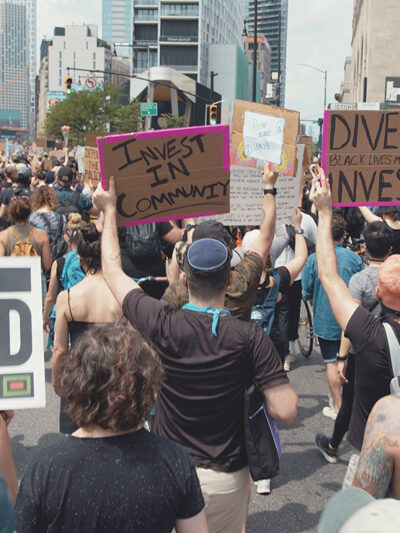
Black Communities Can Not Wait Any Longer. The Time to Divest Is Now.
Gillian Ganesan, Former National Campaign Strategist, American Civil Liberties Union
In t
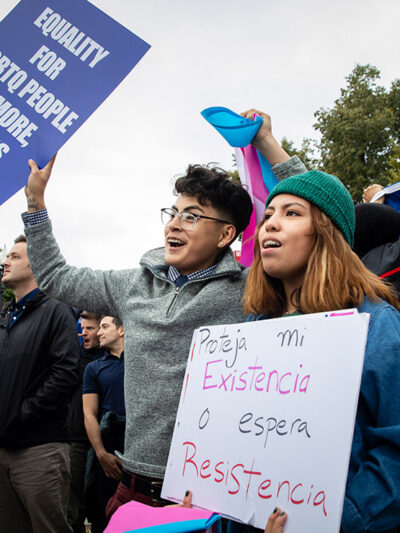
A Landmark Supreme Court Decision Affirms LGBTQ Rights
It’s been more than 50 years since Black and Brown trans women led the revolutionary Stonewall Riots, fighting back against police brutality and discrimination and launching a movement for equality. This week, we celebrated another incredible landmark in the fight for LGBTQ rights.
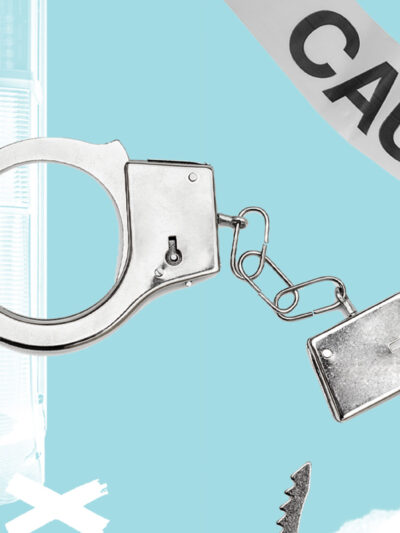
Local Officials: Pledge to Divest from Police and Reinvest in Black Communities
In the wake of the killings by police of George Floyd, Breonna Taylor, and many others, we are seeing a massive popular political realignment around the role and scope of policing in the United States, led by Black organizers and Black-led movement groups. More than ever before, this movement is calling for divestment from police departments, and reinvestment into the life-affirming services that help communities thrive.It’s not enough for local governments to make small cuts, to invest in yet another set of flawed training programs, or to paint the streets with slogans. Cities, towns and local leaders must undergo a reckoning with the political power of law enforcement organizations which have a long history of vigorously opposing any reduction in police power; the amount of money that has been stripped away from necessary public services in favor of militarized weaponry and surveillance technology; and violence by law enforcement that has been enabled by racist, invasive, and abusive police practices.The current spotlight on police violence provides a golden opportunity for local elected leaders across the country to take bold and swift action to reduce the footprint of police in Black communities and reallocate resources into alternatives to policing that keep communities safe and help them thrive.To achieve substantive change, local officials need to commit to:
SCOTUS Must Now Ensure LGBTQ People Are Not Turned Away From Taxpayer-Funded Programs
Rose Saxe, she/her, Deputy Director, LGBT & HIV Project, ACLU
On M
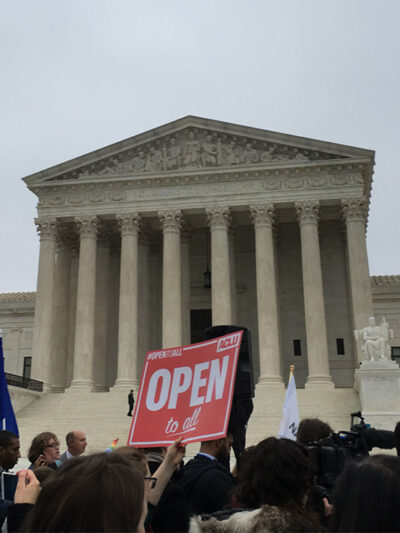
What Today’s Supreme Court Ruling Means for the LGBTQ Community
Rose Saxe, she/her, Deputy Director, LGBT & HIV Project, ACLU
The
We Won’t Address Our Mass Incarceration Crisis Until We Rethink Our Approach to “Violent Crime”
April Rodriguez, Former Paralegal, ACLU Criminal Law Reform Project
Duri
Supreme Court Says Firing Workers Because They Are LGBTQ Is Unlawful Discrimination
James Esseks, Director, LGBTQ & HIV Project, ACLU
In a landmark
Congress Can Lead the Charge on Divesting From Law Enforcement
Kanya Bennett, Former Senior Legislative Counsel, American Civil Liberties Union
As a
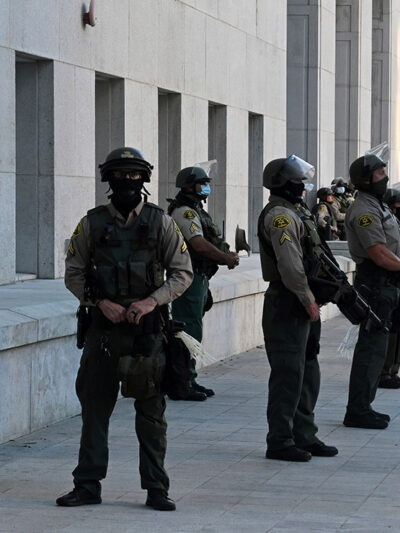
Policing the Press: A Journalist on the Frontlines
Journalists covering protests against police brutality across the country are facing an influx of violence, suppression efforts, and arrests by police. Since the George Floyd protests began, there have been more than 400 claims of aggressions against the press, according to the U.S. Press Freedom tracker. Violations include being assaulted with pepper spray and rubber bullets, dealing with damaged equipment, and even facing arrest. This week, At Liberty is joined by Jared Goyette, a freelance reporter who was hit in the eye with a police projectile while covering a protest in Minneapolis. “There’s always been a degree of tension between police, protesters, and media,” said Goyette of the protest at which he was attacked. “They are tense environments…But based on my experience in these types of events, this was markedly different than anything I’d seen before. It was different by the degree of the lack of clear communication. And it was different in the degree to which the projectiles coming from police seemed continuous, and to some degree arbitrary.”Goyette is now the named plaintiff in a lawsuit the ACLU of Minnesota filed last week against the City of Minneapolis, seeking justice for the violence he and other journalists experienced covering the protests.“There’s a feeling of just being in a historic and important moment and wanting to do as good a job as possible to document it,” Goyette told At Liberty. “And there’s just so much happening at once. As journalists, we’re doing the best we can.”
Stay Informed
Sign up to be the first to hear about how to take action.
By completing this form, I agree to receive occasional emails per the terms of the ACLU’s privacy statement.
By completing this form, I agree to receive occasional emails per the terms of the ACLU’s privacy statement.