

Introduction: The Paradox of the American Project
The United States at 250 years is, in global-historical terms, nascent. Yet the weight it carries (juridical, economic, symbolic) exceeds that of far older republics. This disjuncture between age and influence is not incidental. It reflects the peculiar structure of American democracy, an experiment designed to be unfinished, contested, and periodically unstable.
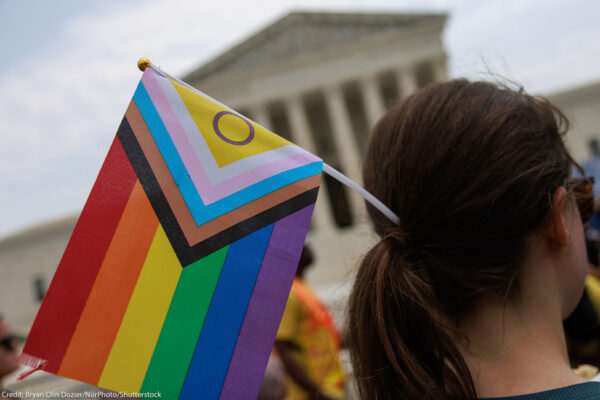
This blog reflects on the 250th anniversary during Pride Month to ask: What does this moment mean for civil rights and civil liberties, specifically for 2SLGBTQ populations? I approach this question as a critical scholar, using critical legal studies (CLS) to analyze how power operates through law, how it is distributed, and how it renders subjects visible or invisible. My argument is that democracy, 2SLGBTQ rights, and CLS exist in dynamic tension with one another, and that power (its accumulation, contestation, and monetization) is the through-line that binds them. The stakes for 2026 are whether we understand this tension as fatal or generative.
I. Democracy as Contested Scaffolding, Not Scripture
The American constitutional order has always been internally divided about its own meaning. The ongoing debate between originalists and contextualists is not a 21st-century aberration; it is constitutive of the document’s function. As Robert Cover argued, law is not merely a system of rules but a nomos, a normative universe we inhabit and contest. The Constitution “lives” precisely because its meaning is never settled.
This contestation produced the central paradox of the republic, a founding document that codified slavery while containing the language (“We the People,” “equal protection,” “liberty”) that would later be mobilized to dismantle it. The same structure that disenfranchised women later incorporated the 19th Amendment. The same legal regime that criminalized sodomy in Bowers v. Hardwick (1986) later recognized same-sex marriage in Obergefell v. Hodges (2015).
From a CLS perspective, this is not evidence of teleological progress. Rather, it demonstrates what Duncan Kennedy calls the “indeterminacy” of law: legal outcomes are not dictated by text, but by the distribution of power among actors who interpret it. The pendulum does not swing by itself. It is moved by material interests, social movements, and institutional gatekeepers.
II. 2SLGBTQ Rights and the Politics of Happiness
The trajectory from Stonewall (1969) to Obergefell (2015) is often narrated as a triumph of liberal inclusion. CLS complicates that narrative. The “pursuit of happiness” in the Declaration of Independence was, for most of U.S. history, tacitly qualified: happiness for some, conditioned on the exclusion of others. The legal recognition of 2SLGBTQ relationships required decades of power-building (in courts, legislatures, media, and markets) to force a reinterpretation of that clause.
Today, the contestation has returned. Current legislative and judicial efforts seek to return 2SLGBTQ rights to the domain of “states’ rights” and religious exemptions, as seen in 303 Creative LLC v. Elenis (2023) and over 500 state-level bills introduced since 2023 targeting gender-affirming care and public accommodation. The argument is familiar: rights are local, conditional, divisible.
Here CLS is analytically useful: it directs us to ask not whether these arguments are “correct” in a doctrinal sense, but whose interests they serve. The move to localize rights is a move to redistribute power, away from federal constitutional baselines and toward subnational and private actors who can then withhold recognition. As Mark Tushnet observes, “rights” are not pre-political; they are the outcome of political struggle.
III. Power as the Through-Line: Division as a Revenue Model
The United States in 2026 is structurally polarized. This polarization is not merely ideological; it is economic. A political economy of division has emerged in which networks, platforms, and institutions monetize outrage and threat perception. This is what Eisenhower’s warning about the “military-industrial complex” anticipated in another domain: a system whose perpetuation becomes profitable.
Critical theory, broadly, and CLS, specifically, require us to name beneficiaries. Who profits when 2SLGBTQ populations are recast as threats to children, to religious liberty, to “parents’ rights”? Who benefits when democracy is framed as a zero-sum contest between incompatible visions of the country? The answer is not abstract. It is measurable in fundraising flows, media engagement metrics, and electoral mobilization strategies.
Democracy, in this context, includes all participants, including those who would use democratic means to curtail the democratic inclusion of others. The Constitution does not discriminate among citizens based on their commitment to pluralism. Actors of imperialist white supremacist classist ableist cisheteropatriarchy (bell hooks) hold the same formal juridical status as anyone else. This is the structural risk of the system: it bets that exposure to contestation will produce legitimacy, not collapse.
IV. What This Means for Now, and Where We Go From Here
CLS is often read as purely deconstructive: it reveals that law is politics, that democracy is socialized, that ideals are constructs. But the critical project cannot end at deconstruction if it hopes to be politically operative. The question for 2026 is not whether democracy is a construct … it is. The question is whether that construct is still capable of distributing power in ways that sustain a multiracial, pluralistic, queer-inclusive polity.
The past 250 years suggest three mechanisms by which the experiment has avoided failure:
Reinterpretation under pressure. From abolition to suffrage to marriage equality, excluded groups have forced new readings of old texts. Power concedes nothing without a demand.
Federal baselines as counterweights to local majoritarianism. When states become laboratories of exclusion, federal intervention has historically recalibrated the distribution of rights.
Collective memory as a brake on forgetting. Democracy erodes when the polity is induced to believe the experiment belongs only to the current “winners.” The historical record (of slavery, disenfranchisement, criminalization, and their reversal) is evidence that no victory or loss is permanent.
The “bet” of American democracy is that it can contain this level of conflict without fracturing. That bet is being tested again. The pendulum is being pushed, deliberately, by actors who benefit from the push.
Therefore, the task for critical scholars and for democratic citizens is convergent: to analyze power, to name its beneficiaries, and to reassert that the experiment’s legitimacy depends on its refusal to be owned by any single faction. The next 250 years do not depend on whether we agree on what the country should be. They depend on whether we agree that the country belongs to all of us, and that the fight over its meaning is the point, not the failure, of the project.
Power is not leaving the field. The only question is how it will be distributed, and to whose benefit. That is the work of repair, and it is not someone else’s job.