
News & Commentary

Ending Indefinite Solitary Confinement for the Vast Majority of People with Death Sentences in Oklahoma
By Travis Handler
Latest Event
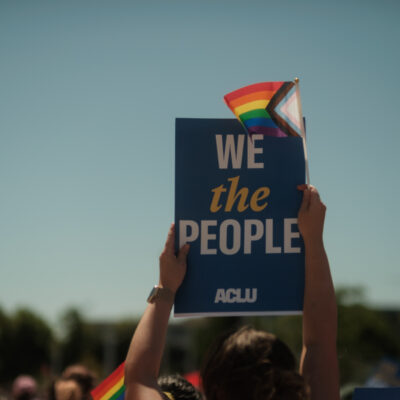
OKC Pride Parade 2026
We are ecstatic to have you join us, as we walk in the annual Oklahoma City Pride Parade on Sunday, June 28th. As you probably know, the work of the ACLU is now more critical than ever, and we want this year's parade group to be the biggest yet!
Please complete the following registration form and we will be in contact with further details.
The first 80 people to register are guaranteed to receive a free limited-edition ACLU of Oklahoma t-shirt. We do not have a max on how many people can walk with us, but we cannot guarantee t-shirts will be available.
**Please submit one registration entry for every person (children too) that will be walking with us, so that we can have an accurate count for t-shirts and water.**
If you have any questions or concerns, please reach out to Carly Heitland at cheitland@acluok.org.

For my grandmother: A receipt
An essay about poverty, hunger and Oklahoma City's anti-panhandling ordinance
By

Legislature Should Stop Trying To Undermine Supreme Court Ruling, ACLU's Kiesel Says
OKLA
By
Legislature Should Move To Expand Medicaid, ACLU OK Executive Director Says
One way to do that, he said, was to expand Medicaid coverage. Kiesel pointed to a 2013 ACLU study that called on states to expand Medicaid coverage as a way to make communities safer. In the study, entitled Healthcare Not Handcuffs, the ACLU called for Medicaid expansion under the federal Affordable Care Act.
“By dramatically expanding and funding healthcare coverage to millions of currently uninsured people, the ACA represents a remarkable opportunity for criminal justice and drug policy reform advocates to advance efforts for policies promoting safe and healthy communities, without excessive reliance on the criminal justice solutions that have become so prevalent under the War on Drugs,” the study said.
According to the study, the expansion of the federal Medicaid programs represents an opportunity to “recast substance use disorders and drug use as a matter for public health rather than criminal justice.”
“This could be a huge tool to help fight crime and combat drug-related crimes,” Kiesel said.
He said a dramatic expansion of healthcare coverage would allow Oklahomans struggling with drug use to obtain community-based care and treatment, instead of incarceration.
Kiesel said state officials could harness the power of the ACA as low-cost and effective alternative to incarceration for defendants with substance use or mental health disorders.
A report, released by the Tulsa-based Oklahoma Policy I
By

ACLU OK 'Disappointed' By Council Action, Will Monitor Enforcement of Ordinance
ACLU Oklahoma Executive Director Ryan Kiesel said his organization would continue to oppose the ordinance and was in the process of evaluating their next steps.
“All options are on the table right now,” Kiesel said. “We will be monitoring closely how the ordinance is implemented and enforced. We have serious concerns that the city of Oklahoma City can enforce this ordinance and still comply with the 1st and 14th Amendments of the United States Constitution.”
By
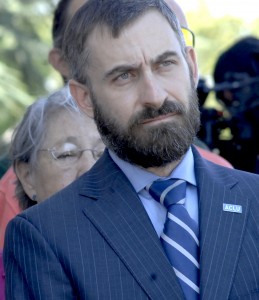
Anti-panhandling Ordinance An Attack On The Poor, ACLU Leader Says
Last Friday, the City of Oklahoma City released a revised version of its proposed anti-panhandling ordinance. A provision of the ordinance would prevent panhandling on medians less than 30 feet wide. The ordinance would make an exception if the median was more than 200 feet away from an intersection. A vote on the proposal is set for Tuesday.
ACLU Oklahoma Legal Director Brady Henderson said the ordinance is unnecessary. Existing laws, he said, already regulate panhandling that poses a public safety risk. He said the new ordinance was an attempt by city officials to hide poverty from the public.
“All the city is trying to do is sweep poverty under the rug,” Henderson said. “Instead of helping individuals, like the vendors of the Curbside Chronicle, do everything they can to escape poverty, the city is trying to simply force them out of view.”
Kiesel said the ACLU O
By

Stay Informed
Sign up to be the first to hear about how to take action.
By completing this form, I agree to receive occasional emails per the terms of the ACLU’s privacy statement.
By completing this form, I agree to receive occasional emails per the terms of the ACLU’s privacy statement.