
News & Commentary

Ending Indefinite Solitary Confinement for the Vast Majority of People with Death Sentences in Oklahoma
By Travis Handler
Latest Event
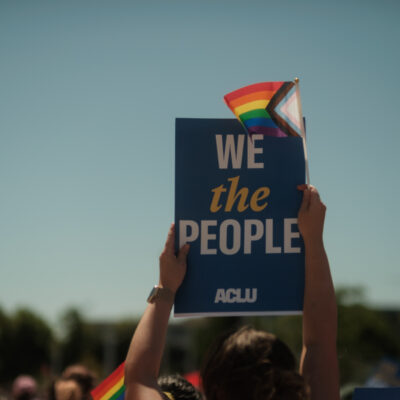
OKC Pride Parade 2026
We are ecstatic to have you join us, as we walk in the annual Oklahoma City Pride Parade on Sunday, June 28th. As you probably know, the work of the ACLU is now more critical than ever, and we want this year's parade group to be the biggest yet!
Please complete the following registration form and we will be in contact with further details.
The first 80 people to register are guaranteed to receive a free limited-edition ACLU of Oklahoma t-shirt. We do not have a max on how many people can walk with us, but we cannot guarantee t-shirts will be available.
**Please submit one registration entry for every person (children too) that will be walking with us, so that we can have an accurate count for t-shirts and water.**
If you have any questions or concerns, please reach out to Carly Heitland at cheitland@acluok.org.


The Heartbreaking Case of Tondalao Hall
McLOUD – About ten years ago, Tondalao Hall was sent to prison. Hall, who was 20 at the time, received a 30-year sentence for failing to protect her children from child abuse.Her boyfriend, Robert Braxton, was charged with four counts of child abuse. Law enforcement officials said Braxton broke the ribs and femur of the couple’s three-month-old daughter. Braxton was violent to both Hall and her children. Hall testified that Braxton choked her, punched her and grabbed her around the neck on several occasions.And though enforcement officials agreed Hall didn’t abuse her children, they said Hall had failed to protect the children because she allowed Braxton to watch them and that she didn’t report the abuse in a timely manner.During the trial, Braxton changed his plea and negotiated a deal that reduced his sentence to just ten years – two years in prison and eight years of probation, with credit for time served. Braxton was freed the day he pled.Things didn’t go so well for Hall.Before Braxton was released from custody, Hall had entered a blind plea. She was sentenced to a total of 30 years in prison by Oklahoma County District Judge Ray Elliott. Prior to her arrest, Hall had no criminal record. Today, Braxton is free. Today, Tondalao Hall remains in prison.A victim punishedFor several years, Hall has sought a modification of her sentence. She asked Elliott, the Oklahoma County District judge who sentenced her, for post conviction relief. She appealed her case to the Oklahoma Court of Criminal Appeals. She also asked the Oklahoma Pardon and Parole Board for clemency.Each time she’s been refused.Writing for the four-person majority, Oklahoma Court of Criminal Appeals Judge Arlene Johnson said Hall’s sentence didn’t shock the conscience of the court “based on the facts and circumstances of the case.”“A sentence within the statutory range will be affirmed on appeals unless, considering all the facts and circumstances, it shocks the conscience of the court,” Johnson wrote. “Hall pled guilty knowing that she would be sentenced by the court within the range provided by law and would have to serve 85 percent of any sentence imposed.”The fact that Braxton received a lesser sentence, Johnson wrote, does not make Hall’s sentence excessive. Not everyone agreed. In a blistering dissent, Court of Criminal Appeals Judge Charles Chapel said he “found some merit” in all three of Hall’s claims of error.“I would modify the petitioner’s sentence as to run the sentences on all four counts concurrently,” Chapel wrote.Hall’s case, Chapel said, was another reason why the state ought to revise how it reviews excessive sentence claims.“Here we have a... young women with three children who was involved in an abusive relationship,” Chapel wrote. “She had no prior record of any kind. Her abusive partner, who is apparently the father of her two youngest children, abused and seriously injured his own children. For committing these crimes he was sentenced to ten years, with eight of the ten years suspended. On the other hand this young woman with no criminal record who was charged with permitting abuse was sentenced to four 15-year sentences with two of the sentenced to run concurrently with the other two.”Still, Hall remains hopeful that she will be freed.Her case has generated national attention. The website Buzzfeed featured Hall’s case in a story about failure to protect laws. In addition, the activist group, UltraViolet, has launched an effort to have Hall’s sentence reduced.“Tondalao Hall shouldn’t be in prison while the man who abused her and her children is free,” the group said in a statement published by Buzzfeed.Additionally, officials with the American Civil Liberties Union of Oklahoma said the organization is actively reviewing Hall’s case. Hall’s sentence, ACLU Oklahoma Legal Director Brady Henderson said, was the perfect example of justice gone wrong.“This is a case where the prosecutor let the bad guy go and sent a victim to prison. That’s wrong,” he said. “That’s not justice. The court failed to even consider the fact that Tondalao Hall was the victim of severe domestic abuse even after it was brought to its attention.”Henderson said the reason Hall’s sentence was so harsh was that prosecutors blamed Hall for their weak case.“The prosecutor didn’t do her job,” Henderson said. “So she blamed a women who had been abused and choked by the man sitting across from her.”Punishment for a bad caseHall was prosecuted by Oklahoma County Assistant District Attorney Angela Marsee. Marsee left her Oklahoma County office and currently serves as District Attorney for Custer, Ellis, Roger Mills and Washita Counties.During Hall’s trial Marsee said Hall was the reason the state’s case “fell apart.”“As this court is well aware, the case against the co-defendant fell apart in part because of her minimizing and denying what happened in the household,” Marsee said. “So she shouldn’t get the benefit of that.”Still, even Marsee said Braxton should have received a harsher punishment than Hall.“He definitely should have received a more significant sentence,” she said during Hall’s sentencing hearing. “But because of her minimizing and continuing to protect herself and protect him that had a real impact on what we were able to do with him during the jury trial. So she should not benefit from that.”Court records show that Hall testified Braxton had “put his hands on her throat and choked her.” In addition Elliott, the judge, acknowledged that Hall was fearful of Braxton. But Hall, Elliott claimed, was hiding something.“There would be certain questions that would be asked of her where she would look over at the defendant and make direct eye contact prior to her taking a moment or two to respond,” Elliot said. “This tells me something, based on my years of experience. Was she scared of him? Probably.”Hall, Elliott said, was less than candid.“I think, in my opinion, that she lied on some issues under oath,” Elliot said. “That’s just my opinion, which I have the right to have, in light of I’m her sentencing judge.”Henderson said if the judge or the prosecutor believed Hall was being untruthful, they should have charged her with contempt of court or perjury. Records show that neither Elliot nor Marsee took action against Hall.“If they thought she was lying, why didn’t they prosecute her?” Henderson said. “They didn’t because they didn’t have a case. Hall’s reluctance to testify against the man that beat her was understandable. You take a young battered woman, with little world experience and you make her testify against the man who was abusing her and she’s obviously going to be frightened. She was fearful about her life and the safety of her children, and the DA’s office did nothing to protect her or properly prepare her to testify.”ACLU Oklahoma Executive Director Ryan Kiesel said the organization would continue to examine Hall's case.“It’s a heartbreaking case,” he said. “When a law can cause more harm than good, we should consider every effort to change the law and undue any injustice it has caused in the meantime.”For her part, Hall said she remains focused on trying to modify her sentence. “I’d like to go home,” she said. “I’d like to see my babies.”
By
ACLU of Oklahoma Releases Mobile App to Hold Law Enforcement Accountable
By Bryan Newell

State Supreme Court Rules For Moms In Landmark Child Custody Case
Tuesday's ruling, considered a landmark ruling for state same-sex child custody cases, said the Oklahoma County District Court erred when it dismissed Ramey's petition.
Writing for the majority, Justice Joseph Watt said Ramey was not a mere 'third party' like a nanny, friend or relative, as suggested by the district court.
"On the contrary, Ramey has been intimately involved in the conception, birth and parenting of their child, at the request and invitation of Sutton," Watt wrote. "Ramey has stood in the most sacred role as parent to their child and always has been referred to as 'mom' by their child. The community, school, medical providers and extended family have all known Ramey as 'the other parent' all with the knowledge and mutual agreement of Sutton."
In a
By
Oklahoma Mothers Waging Legal Battle For Child Custody, Visitation Rights
ACLU of Oklahoma, working with Telford Naidu, filed similar motions and other documents about both cases. Henderson said those cases were also dismissed because the parents were women.
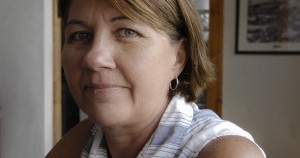
“It’s heart breaking,” Rebekkah Newland said. “It’s been a long time since I’ve been able to hug him. Every day spent waiting for a court ruling amounts to another day I haven’t seen my son.”
Newland said she always wanted to be a mother. Though she and her ex-partner had been together for several years, and even though both decided they wanted a child, their relationship proved difficult.
“We had been together for a couple of years, and we decided we wanted to have a child together. We had a friend who was willing to donate (sperm). So she became pregnant.”
Shortly after that, however, Newland and her partner separated.
“She became pregnant, then we parted ways,” she said. “She moved to Washington and I moved to Texas.”
A few months before her son was born, Newland said her ex-partner wrote a letter, seeking to reconcile. “She said, ‘this is our baby and I want to raise him with you.’”
Newland packed and moved to Washington. “I was devastated when we broke up,” she said. “So when I got the letter, I’m instantly packing my things. I wanted to be with her. This was our baby.”
For a while things were fine.
“We lived with her sister and brother-in-law until he was a few months old,” she said. “Then we got our own place.”
But before her son had celebrated his first birthday, Newland and her partner split for the second and final time.
They tried co-parenting. That arrangement—which lasted almost 10 years—seemed to work.
“For a majority of his life we co-parented,” Newland said. “We were only together for those first 10 months. That was the only time we were together.”
Newland’s desire to be near her son has taken her across the country. She moved from Texas to Washington, to Hawaii, then back to Texas, and eventually to Oklahoma, each time following her ex-spouse in attempt to be near her son.
But somewhere during the past two years and the thousands of miles traveled, the co-parenting stopped. Newland was shut out of her son's life.
“I haven’t seen him since last December,” she said. “It’s been horrible. I’ve been trying this whole time to hold it together, but it’s horrible. He is everything to me. I have no issue with picking up and moving, and quitting my job as long as I get to be with him. I don’t care where it’s at, I don’t care who I have to leave behind, just as long as I get to be with him.”
Jennifer's story
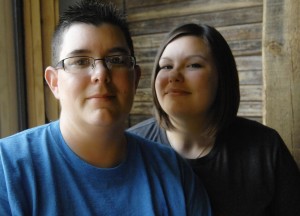
Jennifer Fleming and her partner Whitney had a child together in the fall of 2011. The baby was the child she had always wanted, Fleming said.
The couple went to counseling for year to prepare for the child. “There was a long, complicated series of steps just to get pregnant,” Fleming said. “We tried to have a child off and on for five years.”
Eventually they were successful.
“When she was born I cut the umbilical cord,” Fleming said. “Later we went home and started our family.”
Like so many other parents, Fleming juggled a job, doctor visits and the needs of her child against her relationship with Whitney and her own needs.
“I was there for ev
By

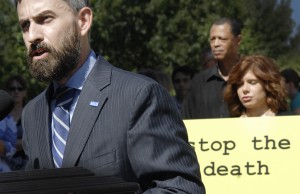
ACLU Official Praises Execution Stays
"We applaud the news that executions are on hold in Oklahoma until the Spring of 2016," Kiesel said. "For the next few months at least, we can be grateful that the state has put away its instruments of death."
However, Kiesel said the organization finds it "extremely difficult to imagine that during the next few months the state will be able to demonstrate that it should be trusted with the most awesome power a people can cede to its government."
"That becomes increasingly less likely with the continued insistence on secrecy and resistance to independent oversight," he said. "We hope during this sobriety from state sponsored murder the people of Oklahoma and their elected representatives will seize the opportunity to reflect on the unavoidable failure of any system capital punishment."
By
Stay Informed
Sign up to be the first to hear about how to take action.
By completing this form, I agree to receive occasional emails per the terms of the ACLU’s privacy statement.
By completing this form, I agree to receive occasional emails per the terms of the ACLU’s privacy statement.