News & Commentary

Ending Indefinite Solitary Confinement for the Vast Majority of People with Death Sentences in Oklahoma
By Travis Handler
Latest Event
Not in My Name Coalition Meeting
Every Oklahoman must ask themselves not whether they support the death penalty, but rather: Do I trust the government with the power to kill its citizens—especially after catastrophic failures in the recent past?
Oklahoma's criminal legal system has failed to protect the innocent, those with serious mental health conditions, and individuals who have suffered adverse childhoods from execution. We cannot allow this to continue! Capital Punishment is racist, arbitrary, costly, and error-prone. It is time to end the death penalty once and for all.
The mission of the Not in My Name Coalition is to raise awareness, educate, and mobilize individuals and groups to take a stand against the use of capital punishment in the state of Oklahoma. Through our efforts, we strive to foster a culture of empathy by validating the humanity of people incarcerated on death row and advocating for their fundamental rights. Together, we declare, Not in My Name: we stand against the ultimate and irreversible act of state-sanctioned violence. Join the fight to end the death penalty in Oklahoma by becoming part of the Not in My Name Coalition. As a member, you will be informed of local events and rallies, gain a space to organize, and join a network of dedicated individuals who are committed to the work alongside you. Sign up now!


George Takei: How the Alien Enemies Act Paved the Way for the Incarceration of My Family
The actor and writer shares with the ACLU why he fears that, in Trump's America, history is repeating itself.

A Quiet Threat to Veterans’ Civil Rights
Harmful interpretations of the Veterans Judicial Review Act risk blocking veterans’ access to federal district courts.

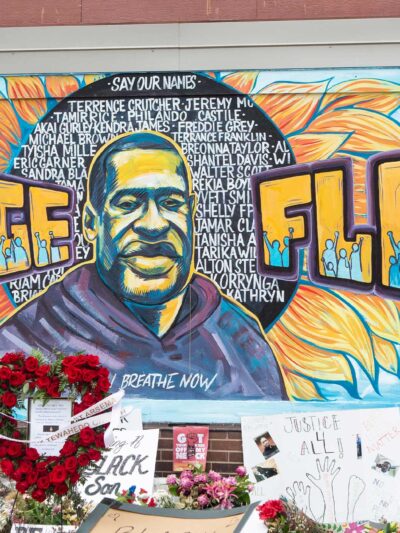
Five Years After George Floyd, the Fight for Police Accountability Isn't Over
As Donald Trump tries to limit efforts to combat police brutality, the ACLU’s Seven States Safety Campaign shows how communities are stepping up to demand justice.
For Undocumented Immigrants, Being ‘Good’ Is Not Good Enough
How fear, partisanship and discrimination are impacting one couple’s fight for immigration justice.

‘Devastated’ and ‘Hopeless.’ Researchers Speak Out on Funding Cuts
The National Institute of Health (NIH) abruptly cancelled millions of dollars in grants for research that it claims are related to “gender identity” or “diversity, equity and inclusion.” The ACLU sued.

Voters Reject President Trump's Dystopian Plans for "Public Safety"
We’re on the Hill this week telling Congress to fund real solutions
Your Questions Answered: Trump’s First 100 Days
Can Trump change the law with an executive order? Erase DEI at the federal level? Target dissent? ACLU experts answer.


Stay Informed
Sign up to be the first to hear about how to take action.
By completing this form, I agree to receive occasional emails per the terms of the ACLU’s privacy statement.
By completing this form, I agree to receive occasional emails per the terms of the ACLU’s privacy statement.