
News & Commentary
Latest Event
Love Thy Neighbor: Defend our Communities: Protect Our Democracy, Part 1
A Voter Registration Event and Community Training! This training facilitated by Dream Action Oklahoma will give you a breakdown of the authoritarian playbook, and help prepare you to make sense of the nonsense by sharing your power and tools to make a difference in your community. ACLU-OK will also provide free voting resources and voter registration.


Writing an Op-Ed is Not Grounds for Deportation
The U.S. government’s escalating attacks on noncitizens’ right to free speech, including our client Rümeysa Öztürk, should scare us all.

Letter to My Husband, Mahmoud Khalil
As she prepares to welcome her first child with husband Mahmoud Khalil, Dr. Noor Abdalla writes to her husband one month after he was unlawfully detained for exercising his free speech rights.

Death Row Case Exposes Failures to Protect Childhood Trauma Survivors
Mikal Mahdi’s life was marked by abuse. Today, as he awaits execution, the courts have the responsibility to acknowledge the systemic failures that shaped his path.

I Should Not Have to Fight for Fair Treatment in the Workplace
D.K., a Pawnee woman who is Deaf, was denied a promotion after being assessed through biased automated hiring technology.

The Human Toll of Trump's Anti-Trans Crusade
President Donald Trump’s assault on transgender rights is a gross overreach of presidential power and yet another attempt to punish trans people just for existing.

Anniversary of ‘Bloody Sunday’ Marks Continued Fight for Voting Rights
Selma Jubilee revelers annual trek across the Edmund Pettus Bridge in Alabama reminds us why we can never stop advocating for enfranchisement for Black Americans.
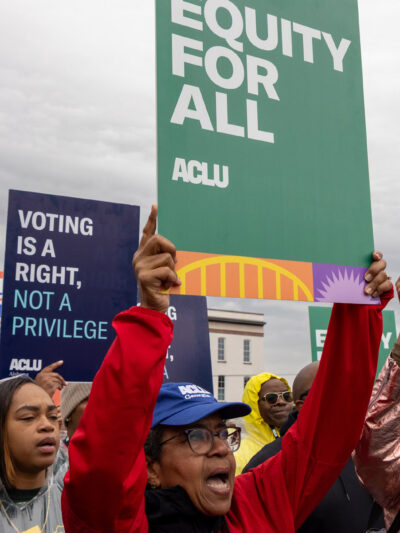
Trump's Attempt to Deride NLRB Won't Stop Power of Collective Actions
While the NLRB’s reopening is encouraging, workers must rely on each other to fulfill the promise of collective action.


Stay Informed
Sign up to be the first to hear about how to take action.
By completing this form, I agree to receive occasional emails per the terms of the ACLU’s privacy statement.
By completing this form, I agree to receive occasional emails per the terms of the ACLU’s privacy statement.