
News & Commentary

Ending Indefinite Solitary Confinement for the Vast Majority of People with Death Sentences in Oklahoma
By Travis Handler
Latest Event
Write the Row: Holiday Cards Event
Join ACLU of Oklahoma, the Julius Jones Institute, and the Oklahoma Coalition to Abolish the Death Penalty for an afternoon of community and solidarity! Together, we will be writing holiday cards to the men on death row.
The purpose of the “Write the Row” program is to affirm the humanity of the men on death row and ease their feelings of isolations through letters of encouragement. During this event, we want to ensure that the men and their families feel supported throughout the holiday season.
Letter writing materials and snacks will be provided. Please join us and invite your own friends and families to attend!

Federal Judges are Failing Incarcerated People During the Pandemic
Andrea Woods, Staff Attorney, Criminal Law Reform Project
I am

No More Forced Prayers in School
Heather L. Weaver, Senior Staff Attorney, ACLU Program on Freedom of Religion and Belief
For

At the Polls, Episode 1: What to Expect on Election Day 2020
We usually know what to expect on any given presidential Election Day. After all, they happen every four years. But this is the first election in our lifetime to occur during a global pandemic, and there have already been significant changes to the electoral process as more voters plan to mail in their ballots than ever before. How will that change our quintessential American tradition of watching the results roll in on election night?

Election Season is Here. Are You Ready to Vote?
It’s after Labor Day, the weather is changing, leaves are turning, which all means — Election season is officially here. November 3 is now less than 50 days away, and we at the ACLU have been working for months nationwide to ensure voters safe and secure access to the ballot and to protect everyone’s rights while voting — and now that time is here. During the COVID-19 pandemic, it is essential that we not only protect our health but also our civil liberties — including our fundamental right to vote. It’s on all of us to make our plan to vote. Today is not too early to act.
The Myth of the “Bad” Immigrant
Immigrant communities are often asked to “get right with the law,” but is the law right in the first place? That’s what Alina Das asks in her new book, No Justice in the Shadows. She delves into her experience as the daughter of immigrants, an immigration attorney, and a clinical law professor to explore the intersection of immigration and the criminal justice system.
Lower Courts Agree — It’s Time to End Qualified Immunity
April Rodriguez, Former Paralegal, ACLU Criminal Law Reform Project
Earl

The Trump Administration’s Attack on Abortion Access Disproportionately Harms Communities of Color Already Devastated by COVID-19
Rachel Reeves, she/her/hers, Staff Attorney, ACLU Reproductive Freedom Project
Six months in
ACLU Calls On Tech Companies to End Their Alliance with ICE and CBP
Vasudha Talla, Staff Attorney, ACLU of Northern California
West
For Black Immigrants, Police and ICE Are Two Sides of the Same Coin
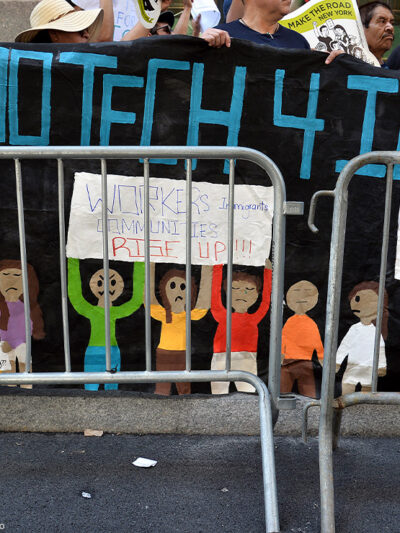
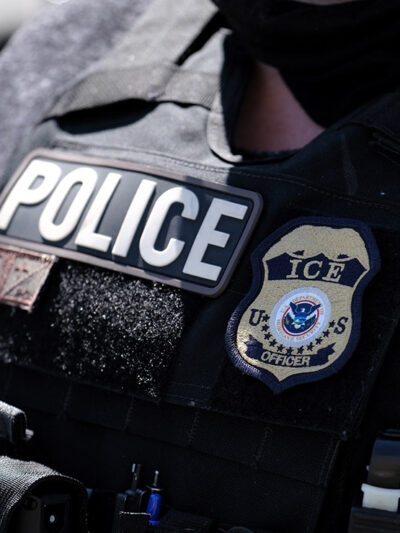
More than 20 years ago, 23-year-old Amadou Diallo was gunned down in front of his apartment in the Bronx by the NYPD. Diallo had been walking home when four officers mistook him for a suspect in a rape investigation, firing a total of 41 shots at him and hitting him 19 times after mistaking his wallet for a gun. All four officers were later acquitted of charges related to his death.Diallo’s death sparked a massive protest movement in New York City, with echoes of this summer’s demonstrations over the murder of George Floyd. Furious calls for police reform were dismissed by then-Mayor Rudolph Giuliani, who called the protests “silly.” In retrospect, the killing is a signpost in America’s long history of police violence against Black people, and a tragic symbol of how little has changed.What’s often lost in the memory of Diallo’s death, though, is the way it also highlighted the dangers that Black immigrants encounter in America. Diallo was of Guinean origin, arriving in New York just a little over a year before his death. He didn’t share much by way of background or life experiences with his Black American neighbors, but what he did share was the color of their skin. Because of that, whether he knew it or not when he first arrived here, Diallo was living with the same risk of police violence that they were. For Black immigrants, life in the U.S. often means being encircled by the same systems of criminalization, profiling, and over-policing as Black Americans. His death was an extreme example of that risk, but a police encounter doesn’t need to generate big headlines to have life-altering and even deadly outcomes for immigrants. Because of harsh laws that mandate severe penalties for non-citizens who come into contact with the criminal justice system, an arrest that might typically lead only to probation or a few weeks in jail can trigger months or years spent in immigration detention and eventually, deportation to a country they may barely know. These laws, combined with ever-present aggressive policing in the majority-Black neighborhoods where they live, create an additional layer of punishment for Black immigrants in a legal system already skewed against them. During a summer where millions have poured onto the streets to yell “Black Lives Matter,” advocates from Black immigrant communities say that should include theirs as well. “Irish and Italian immigrants, along with some white-passing Latinx immigrants, can assimilate into white America,” said Abraham Paulos, director of policy and communications for the Black Alliance for Just Immigration (BAJI). “Black immigrants don’t have that option. We’re integrated into Black America along with all the systems of oppression and discrimination.”” The number of Black immigrants in America has grown steadily since the 1980s. Now, around one in 10 Black people in America were born overseas. But despite their numbers, they rarely feature prominently in immigration discourse. This means the specific issues they face often go overlooked.Despite only making up around 7 percent of the non-citizen population, Black immigrants represent over 20 percent of those in deportation proceedings on criminal grounds. Local jails and police often act as feeders for ICE, and where local ordinances bar that type of cooperation, ICE agents have been known to scour court dockets in order to make arrests inside courthouses. The list of crimes that can trigger deportation is vast, and includes minor offenses such as drug possession, turnstile jumping, DUI, and writing a bad check. And for immigrants who get caught in the criminal justice system, automatic detention in an ICE facility often follows a sentence or arrest. Once they wind up in one of those facilities, it’s nearly impossible for immigrants to be released while they fight their case in court. This can mean months or years in detention facilities that are notorious for atrocious conditions and abuse. Black immigrants fare particularly poorly in those facilities – one recent study found that they were placed into solitary confinement six times more often than other immigrants. In Louisiana, a group of detained Cameroonians have now been on a hunger strike related to conditions in the Pine Prairie ICE detention center for more than three weeks. And while ICE doesn’t track racial demographic data of the people it deports, in the first year of the Trump administration deportations to countries in sub-Saharan Africa rose almost across the board.
Stay Informed
Sign up to be the first to hear about how to take action.
By completing this form, I agree to receive occasional emails per the terms of the ACLU’s privacy statement.
By completing this form, I agree to receive occasional emails per the terms of the ACLU’s privacy statement.