
News & Commentary

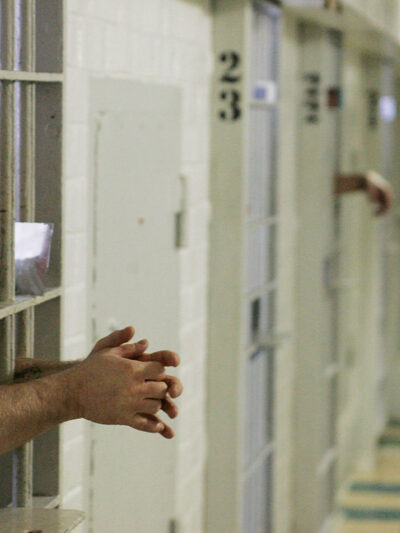
Ending Indefinite Solitary Confinement for the Vast Majority of People with Death Sentences in Oklahoma
By Travis Handler
Latest Event
Write the Row: Holiday Cards Event
Join ACLU of Oklahoma, the Julius Jones Institute, and the Oklahoma Coalition to Abolish the Death Penalty for an afternoon of community and solidarity! Together, we will be writing holiday cards to the men on death row.
The purpose of the “Write the Row” program is to affirm the humanity of the men on death row and ease their feelings of isolations through letters of encouragement. During this event, we want to ensure that the men and their families feel supported throughout the holiday season.
Letter writing materials and snacks will be provided. Please join us and invite your own friends and families to attend!


My Brother’s Not Afraid of Much. With COVID-19 in Prison, He’s Scared Out of His Mind.
There’s not much that my brother Brian fears. He’s 10 years older than me, a bear of a man physically, and his entire life he’s been a ball of energy. He coached my football team when I was a youth. He dreamed of becoming a business owner. The cleaning service he started from the trunk of his car grew into several companies with 50 employees. After a terrible car accident, he got a prison sentence, and has made it his goal to use that time to improve himself. He has a team of family and friends rooting for him, but no one is more optimistic than Brian about all of the things he’ll contribute once he’s out. But when COVID-19 hit, that fearless outlook changed. The virus spread like wildfire through the New Jersey prison where he is incarcerated. Since March, he’s been scared out of his mind. If my brother gets COVID-19, he’s never coming home. His release date is February 2021. If Brian contracts the virus, he will not make it. He’s 59, and has Type 1 diabetes, heart disease, and weight issues — all risk factors. During his sentence, medical staff left a catheter in for several months longer than they should have, and he nearly died from sepsis. For my brother, every single day is literally the difference between life and death. New Jersey has a shameful distinction when it comes to COVID-19: Despite success in containing the virus in other ways, the death rates in our prisons are the worst in the country. There is currently legislation pending that could make New Jersey a leader in containing the pandemic, rather than a cautionary tale. This legislation, S2519/A4235, sponsored by Sens. Nellie Pou and Sandra Cunningham, Assemblyman Raj Mukherji, Assemblywoman Shavonda Sumter, and Assemblywoman Verlina Reynolds-Jackson, would release people from prison who have less than eight months to go on their sentence, advancing public health in two critically important ways. First, it would allow people to distance themselves outside of prison, an environment that’s like a cruise ship on steroids, where social distancing is impossible. Further, it would lower the prison population to make social distancing possible — not just for the people who are serving time, but for employees, medical staff, and the families they go home to. Everyone who would be released under the legislation is getting out soon anyway. This bill would lessen the chance of dying in the short period of time before they can come home. Having passed through the New Jersey Senate last month, the bill must now be voted on in the assembly in order to go to the Governor’s desk. If this legislation fails, the state of New Jersey sends the message that six extra months in prison is worth my brother’s life. As we’ve known since the pandemic began, it is imperative to reduce the prison population as quickly and safely as possible if we are to protect as many lives as we can from this deadly virus. The possibility of death is extremely real. Through the course of fighting for my brother’s life, I’ve come to know Bernice Ferguson. Her son Rory had just celebrated his 39th birthday and was scheduled for release from prison within a matter of weeks. Bernice never got to throw the party she was planning to celebrate his homecoming. Instead, because he contracted COVID-19, she had to plan a funeral. We are all human. We all make mistakes. My brother knows he made a serious one. He regrets it every single day, and he lives every day to make himself a better person. My 16-year-old son, inspired by the entrepreneurship of his uncle and godfather Brian, started a lawn care business of his own. For Brian’s 59th birthday, on Aug. 7, he sent his uncle a card with one simple message: “I just want my godfather to come home, so we can work together.” Of the 3,000 people who would be eligible for release under S2519/A4235, Brian is in some ways luckier than most despite his health. He has me, our three other siblings, our mother, and a host of friends and family who love him, and who have the energy and knowledge to do what we can to fight for his release. But without legislation, there’s only a limited amount we can do. Whenever another group of people in his prison leave en masse for quarantine, we talk and cry, worrying he could be next. We’ve had several conversations about end-of-life care. The reality of death is everywhere. In recent weeks, we as a nation have surpassed yet another heartbreaking milestone: More than 1,000 people have now died of COVID-19 in prisons across the country. More must be done to save lives. Passing S2519/A4235 in New Jersey would do just that. From the beginning of his sentence, my brother has worked to become a better person than he was when he was first locked up. Before that fateful accident, my brother had built successful companies and strengthened our community — he helped his employees get citizenship, helped families purchase their first home, gave people their first jobs. When Brian puts his mind to something, he does it. Outside of prison, he’ll make an even greater impact than before. But to get that done, we have to get him home. New Jerseyans, send a message to lawmakers to vote YES on S2519/A4235 and urge Governor Murphy to swiftly sign it into law.
Why Evicting Millions During a Pandemic is Bad For Our Democracy
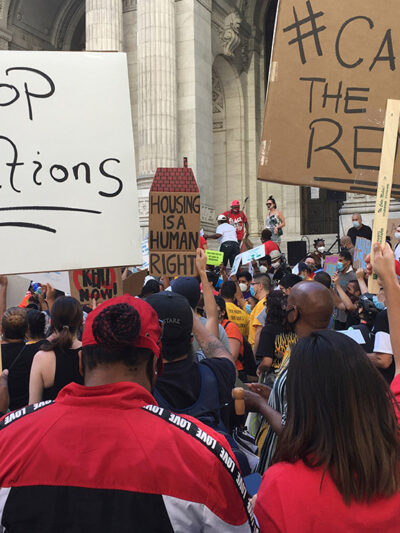
As the COVID-19 pandemic stretches on, people across the country face the economic devastation left in its wake. Along with staggering unemployment numbers, millions of renters now face eviction — a situation made even more dire by the global health crisis. Congress responded by instating an eviction moratorium for more than 12 million rental units across the country. But that moratorium expired on July 24th. This week, the Center for Disease Control introduced another moratorium, protecting certain renters in certain circumstances until the new year. But that still leaves many unprotected, and those who are protected remain burdened with a hefty bill due in 2021.
The Law Enforcement Violence Trump Won’t Talk About
Day after day, night after night, protesters have been taking to the streets since the police killing of George Floyd. Led by local Black activists and grassroots groups, they’re chanting, singing, shouting, kneeling, marching, and even laying on the ground to demand justice for the many Black lives that have been taken by police. Everyone — from parents, grandparents, kids, and more — are showing up.But Donald Trump from day one has expressed extreme hostility towards the Black Lives Matter movement. He has called on NFL owners to retaliate against players who dared to kneel in protest, said it was “terrible” to ask why Black Americans are still dying at the hands of law enforcement in this country, compared police killing and injuring Black people to golfers who “choke,” and has called for law enforcement to “dominate” protesters demanding that our legal system value Black lives. He has even encouraged police to abuse people in their custody.As the movement and calls for change gain broader support from more Americans and people around the world, protesters are being met by even more brutality — in many cases by the same police departments whose racism and brutality they are protesting. Police and federal agents are spreading fear and panic in communities, threatening lives, and relentlessly attacking people simply exercising their First Amendment right to protest police racism and brutality. Law enforcement at all levels haven’t even spared U.S. military veterans, journalists, legal observers, and medics. This assault on the First Amendment has only escalated tensions, and emboldened white supremacists to spread terror and hate.The ACLU is taking to the streets, legislatures and courts nationwide to demand an end to police violence and accountability for rights violations. Here is just a partial running list of federal and local law enforcement abuses against individuals exercising their First Amendment rights in Portland, Oregon:

College Athletes and the Systems That Silence Them
Sports have long been an arena where civil rights and civil liberties questions have taken center stage: Track and field star Tommie Smith raised his fist for racial justice on the 1968 Olympic podium. Tennis great Billie Jean King fought for equal pay for women. Olympic runner Caster Semana challenged intersex bigotry to be able to compete. And of course, NBA players organized a strike this week in protest of the killing by police of Jacob Blake in Kenosha, Wisconsin.

100 Years and Counting: The Fight for Women’s Suffrage Continues
Kristen Lee, Former Senior Policy Analyst, ACLU
4 Quotes from Gavin Grimm’s Latest Victory
The Fourth Circuit Court of Appeals yesterday ruled in favor of American Civil Liberties Union client Gavin Grimm, deciding that restroom policies segregating transgender students from their peers and denying transgender student accurate transcripts are unconstitutional and violate Title IX, the federal law prohibiting sex discrimination in education. The decision comes after a five-year long court battle that began when the American Civil Liberties Union and ACLU of Virginia filed a sex discrimination lawsuit against the Gloucester Country School Board for adopting a discriminatory policy requiring Grimm and other transgender students to use “alternative private” restrooms. Here are four highlights from the decision today:

Hundreds of Thousands of People in Limbo as They Wait for Justice
Manar Waheed, Senior Legislative and Advocacy Counsel, ACLU
What’s it Like to be in Immigration Lockup During a Pandemic?
In the 1980s, fewer than 2,000 people were locked up in an immigration detention facility on an average day in America. Since then, that number has skyrocketed, quadrupling from 7,475 to 32,985 people detained by ICE per day between 1995 and 2016. Under the administration of President Donald Trump, the numbers have shot up even higher — at one point last year, a staggering 56,000 people were behind bars each night in an ICE detention facility. When asylum-seekers and other migrants in Customs and Border Protection facilities are included, the total figure rises to nearly 80,000 people detained by the U.S. government per day.This explosive growth of the U.S. immigration detention system tracks the rise of mass incarceration in America, prompted by punitive legislation passed by Congress in the mid-1990s around the same time as the infamous “crime bill,” and later through a massive post-9/11 expansion. Since then, the number of detained immigrants in the U.S. has grown nearly every year under Democratic and Republican administrations alike. Now, it’s a sprawling prison system, with 40 new immigration detention centers opening their doors just since the beginning of the Trump presidency alone. For immigrants caught in this system, life is often a nightmare of rampant medical neglect, overuse of solitary confinement, sexual abuse, excessive use of force, arbitrary transfers to other facilities across the country, unreasonably high bond costs, and long periods spent away from family members and loved ones. The COVID-19 crisis pulled the curtain back once again on the abuse and neglect that is deeply embedded in these detention facilities. While the rest of the country hunkered down in their homes, immigrants in detention have been forced to confront the pandemic in cramped conditions without adequate cleaning protocols or in some cases even basic sanitation supplies like soap. Guards have violently retaliated against immigrants protesting those conditions, and ICE has resisted efforts to secure their release for public health reasons.A combination of lawsuits and public pressure eventually forced ICE to release more than 1,000 people from detention because of concerns over the spread of COVID-19 between mid-March and early May. Legal actions brought by the ACLU have secured the release of more than 450 people so far. But there are still more than 21,000 people in immigration detention — a drop since last year’s high that is largely attributable to a near-total shutdown of the southern border. Whenever a new administration takes office, it will inherit an immigration detention system that has become an out-of-control, wasteful, and cruel behemoth. Drastically reducing the number of people trapped inside that system will be a crucial first step towards establishing a more humane and responsible immigration policy. In recent weeks, the ACLU interviewed a number of immigrants who were released from detention due to concerns over the COVID-19 crisis. They shared the following stories of what it was like to be incarcerated in an immigration detention facility during the pandemic. *Note: interviews have been condensed and edited.


Stay Informed
Sign up to be the first to hear about how to take action.
By completing this form, I agree to receive occasional emails per the terms of the ACLU’s privacy statement.
By completing this form, I agree to receive occasional emails per the terms of the ACLU’s privacy statement.