
News & Commentary
Latest Event
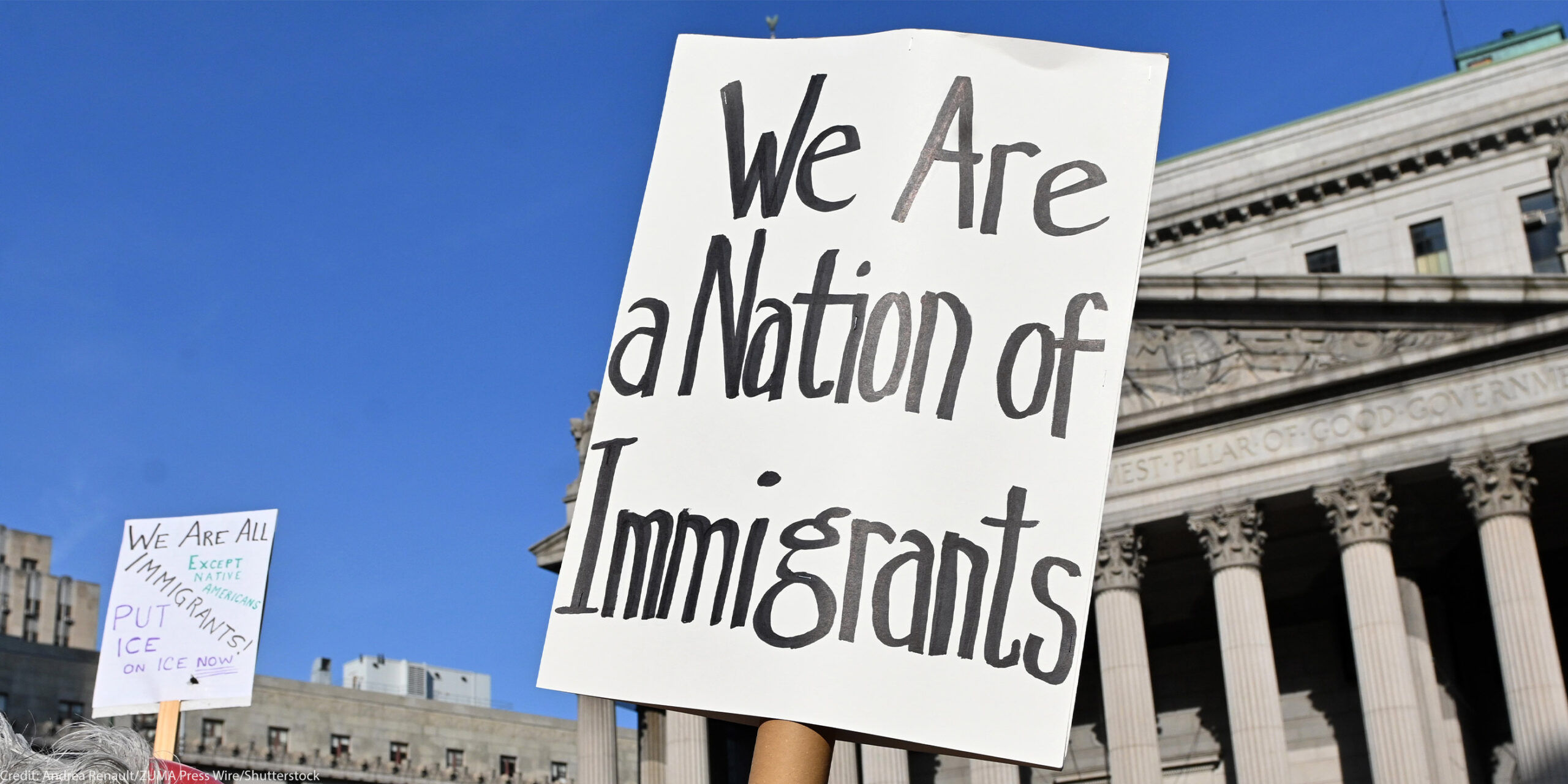
NextGen Meeting: Find your voice. Create change.
The goal of this program is to provide students with a place to meet other young advocates, connect with community leaders, and learn new skills and information that will allow them to be better advocates in their schools and communities.
The purpose of this first meeting is for students to get to know each other and meet community organizing leaders in OKC. Students will also have a chance to brainstorm ideas on how to approach pressing issues in their communities.

Lower Courts Agree — It’s Time to End Qualified Immunity
April Rodriguez, Former Paralegal, ACLU Criminal Law Reform Project
Earl

The Trump Administration’s Attack on Abortion Access Disproportionately Harms Communities of Color Already Devastated by COVID-19
Rachel Reeves, she/her/hers, Staff Attorney, ACLU Reproductive Freedom Project
Six months in
ACLU Calls On Tech Companies to End Their Alliance with ICE and CBP
Vasudha Talla, Staff Attorney, ACLU of Northern California
West
For Black Immigrants, Police and ICE Are Two Sides of the Same Coin
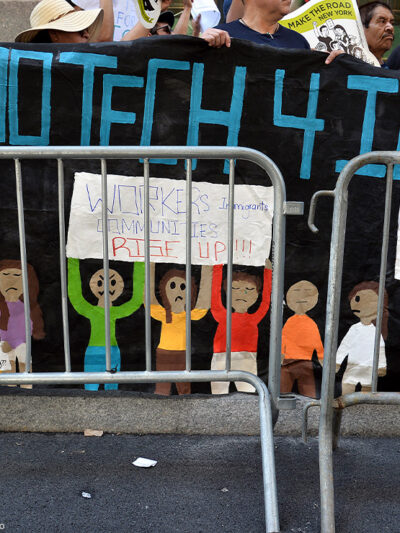
More than 20 years ago, 23-year-old Amadou Diallo was gunned down in front of his apartment in the Bronx by the NYPD. Diallo had been walking home when four officers mistook him for a suspect in a rape investigation, firing a total of 41 shots at him and hitting him 19 times after mistaking his wallet for a gun. All four officers were later acquitted of charges related to his death.Diallo’s death sparked a massive protest movement in New York City, with echoes of this summer’s demonstrations over the murder of George Floyd. Furious calls for police reform were dismissed by then-Mayor Rudolph Giuliani, who called the protests “silly.” In retrospect, the killing is a signpost in America’s long history of police violence against Black people, and a tragic symbol of how little has changed.What’s often lost in the memory of Diallo’s death, though, is the way it also highlighted the dangers that Black immigrants encounter in America. Diallo was of Guinean origin, arriving in New York just a little over a year before his death. He didn’t share much by way of background or life experiences with his Black American neighbors, but what he did share was the color of their skin. Because of that, whether he knew it or not when he first arrived here, Diallo was living with the same risk of police violence that they were. For Black immigrants, life in the U.S. often means being encircled by the same systems of criminalization, profiling, and over-policing as Black Americans. His death was an extreme example of that risk, but a police encounter doesn’t need to generate big headlines to have life-altering and even deadly outcomes for immigrants. Because of harsh laws that mandate severe penalties for non-citizens who come into contact with the criminal justice system, an arrest that might typically lead only to probation or a few weeks in jail can trigger months or years spent in immigration detention and eventually, deportation to a country they may barely know. These laws, combined with ever-present aggressive policing in the majority-Black neighborhoods where they live, create an additional layer of punishment for Black immigrants in a legal system already skewed against them. During a summer where millions have poured onto the streets to yell “Black Lives Matter,” advocates from Black immigrant communities say that should include theirs as well. “Irish and Italian immigrants, along with some white-passing Latinx immigrants, can assimilate into white America,” said Abraham Paulos, director of policy and communications for the Black Alliance for Just Immigration (BAJI). “Black immigrants don’t have that option. We’re integrated into Black America along with all the systems of oppression and discrimination.”” The number of Black immigrants in America has grown steadily since the 1980s. Now, around one in 10 Black people in America were born overseas. But despite their numbers, they rarely feature prominently in immigration discourse. This means the specific issues they face often go overlooked.Despite only making up around 7 percent of the non-citizen population, Black immigrants represent over 20 percent of those in deportation proceedings on criminal grounds. Local jails and police often act as feeders for ICE, and where local ordinances bar that type of cooperation, ICE agents have been known to scour court dockets in order to make arrests inside courthouses. The list of crimes that can trigger deportation is vast, and includes minor offenses such as drug possession, turnstile jumping, DUI, and writing a bad check. And for immigrants who get caught in the criminal justice system, automatic detention in an ICE facility often follows a sentence or arrest. Once they wind up in one of those facilities, it’s nearly impossible for immigrants to be released while they fight their case in court. This can mean months or years in detention facilities that are notorious for atrocious conditions and abuse. Black immigrants fare particularly poorly in those facilities – one recent study found that they were placed into solitary confinement six times more often than other immigrants. In Louisiana, a group of detained Cameroonians have now been on a hunger strike related to conditions in the Pine Prairie ICE detention center for more than three weeks. And while ICE doesn’t track racial demographic data of the people it deports, in the first year of the Trump administration deportations to countries in sub-Saharan Africa rose almost across the board.
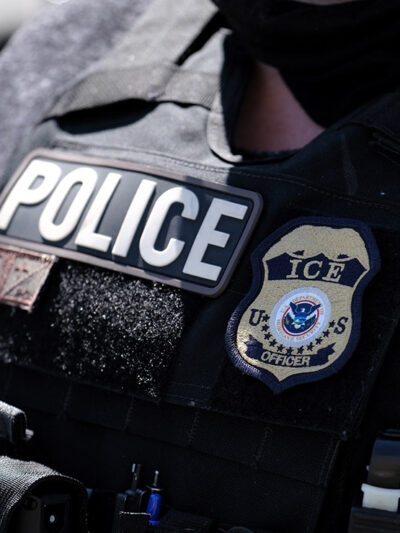
My Brother’s Not Afraid of Much. With COVID-19 in Prison, He’s Scared Out of His Mind.
There’s not much that my brother Brian fears. He’s 10 years older than me, a bear of a man physically, and his entire life he’s been a ball of energy. He coached my football team when I was a youth. He dreamed of becoming a business owner. The cleaning service he started from the trunk of his car grew into several companies with 50 employees. After a terrible car accident, he got a prison sentence, and has made it his goal to use that time to improve himself. He has a team of family and friends rooting for him, but no one is more optimistic than Brian about all of the things he’ll contribute once he’s out. But when COVID-19 hit, that fearless outlook changed. The virus spread like wildfire through the New Jersey prison where he is incarcerated. Since March, he’s been scared out of his mind. If my brother gets COVID-19, he’s never coming home. His release date is February 2021. If Brian contracts the virus, he will not make it. He’s 59, and has Type 1 diabetes, heart disease, and weight issues — all risk factors. During his sentence, medical staff left a catheter in for several months longer than they should have, and he nearly died from sepsis. For my brother, every single day is literally the difference between life and death. New Jersey has a shameful distinction when it comes to COVID-19: Despite success in containing the virus in other ways, the death rates in our prisons are the worst in the country. There is currently legislation pending that could make New Jersey a leader in containing the pandemic, rather than a cautionary tale. This legislation, S2519/A4235, sponsored by Sens. Nellie Pou and Sandra Cunningham, Assemblyman Raj Mukherji, Assemblywoman Shavonda Sumter, and Assemblywoman Verlina Reynolds-Jackson, would release people from prison who have less than eight months to go on their sentence, advancing public health in two critically important ways. First, it would allow people to distance themselves outside of prison, an environment that’s like a cruise ship on steroids, where social distancing is impossible. Further, it would lower the prison population to make social distancing possible — not just for the people who are serving time, but for employees, medical staff, and the families they go home to. Everyone who would be released under the legislation is getting out soon anyway. This bill would lessen the chance of dying in the short period of time before they can come home. Having passed through the New Jersey Senate last month, the bill must now be voted on in the assembly in order to go to the Governor’s desk. If this legislation fails, the state of New Jersey sends the message that six extra months in prison is worth my brother’s life. As we’ve known since the pandemic began, it is imperative to reduce the prison population as quickly and safely as possible if we are to protect as many lives as we can from this deadly virus. The possibility of death is extremely real. Through the course of fighting for my brother’s life, I’ve come to know Bernice Ferguson. Her son Rory had just celebrated his 39th birthday and was scheduled for release from prison within a matter of weeks. Bernice never got to throw the party she was planning to celebrate his homecoming. Instead, because he contracted COVID-19, she had to plan a funeral. We are all human. We all make mistakes. My brother knows he made a serious one. He regrets it every single day, and he lives every day to make himself a better person. My 16-year-old son, inspired by the entrepreneurship of his uncle and godfather Brian, started a lawn care business of his own. For Brian’s 59th birthday, on Aug. 7, he sent his uncle a card with one simple message: “I just want my godfather to come home, so we can work together.” Of the 3,000 people who would be eligible for release under S2519/A4235, Brian is in some ways luckier than most despite his health. He has me, our three other siblings, our mother, and a host of friends and family who love him, and who have the energy and knowledge to do what we can to fight for his release. But without legislation, there’s only a limited amount we can do. Whenever another group of people in his prison leave en masse for quarantine, we talk and cry, worrying he could be next. We’ve had several conversations about end-of-life care. The reality of death is everywhere. In recent weeks, we as a nation have surpassed yet another heartbreaking milestone: More than 1,000 people have now died of COVID-19 in prisons across the country. More must be done to save lives. Passing S2519/A4235 in New Jersey would do just that. From the beginning of his sentence, my brother has worked to become a better person than he was when he was first locked up. Before that fateful accident, my brother had built successful companies and strengthened our community — he helped his employees get citizenship, helped families purchase their first home, gave people their first jobs. When Brian puts his mind to something, he does it. Outside of prison, he’ll make an even greater impact than before. But to get that done, we have to get him home. New Jerseyans, send a message to lawmakers to vote YES on S2519/A4235 and urge Governor Murphy to swiftly sign it into law.
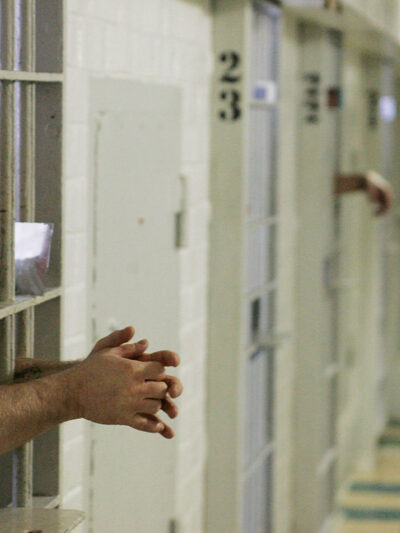
Why Evicting Millions During a Pandemic is Bad For Our Democracy
As the COVID-19 pandemic stretches on, people across the country face the economic devastation left in its wake. Along with staggering unemployment numbers, millions of renters now face eviction — a situation made even more dire by the global health crisis. Congress responded by instating an eviction moratorium for more than 12 million rental units across the country. But that moratorium expired on July 24th. This week, the Center for Disease Control introduced another moratorium, protecting certain renters in certain circumstances until the new year. But that still leaves many unprotected, and those who are protected remain burdened with a hefty bill due in 2021.
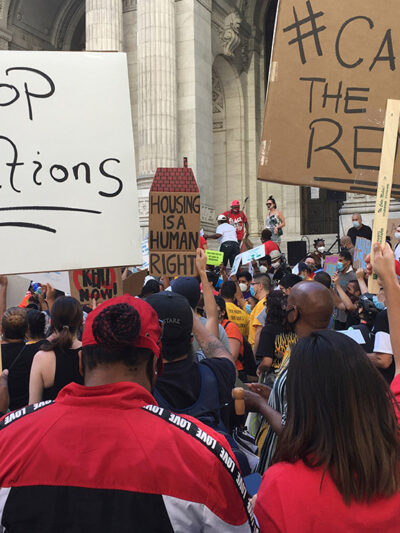
The Law Enforcement Violence Trump Won’t Talk About
Day after day, night after night, protesters have been taking to the streets since the police killing of George Floyd. Led by local Black activists and grassroots groups, they’re chanting, singing, shouting, kneeling, marching, and even laying on the ground to demand justice for the many Black lives that have been taken by police. Everyone — from parents, grandparents, kids, and more — are showing up.But Donald Trump from day one has expressed extreme hostility towards the Black Lives Matter movement. He has called on NFL owners to retaliate against players who dared to kneel in protest, said it was “terrible” to ask why Black Americans are still dying at the hands of law enforcement in this country, compared police killing and injuring Black people to golfers who “choke,” and has called for law enforcement to “dominate” protesters demanding that our legal system value Black lives. He has even encouraged police to abuse people in their custody.As the movement and calls for change gain broader support from more Americans and people around the world, protesters are being met by even more brutality — in many cases by the same police departments whose racism and brutality they are protesting. Police and federal agents are spreading fear and panic in communities, threatening lives, and relentlessly attacking people simply exercising their First Amendment right to protest police racism and brutality. Law enforcement at all levels haven’t even spared U.S. military veterans, journalists, legal observers, and medics. This assault on the First Amendment has only escalated tensions, and emboldened white supremacists to spread terror and hate.The ACLU is taking to the streets, legislatures and courts nationwide to demand an end to police violence and accountability for rights violations. Here is just a partial running list of federal and local law enforcement abuses against individuals exercising their First Amendment rights in Portland, Oregon:

College Athletes and the Systems That Silence Them
Sports have long been an arena where civil rights and civil liberties questions have taken center stage: Track and field star Tommie Smith raised his fist for racial justice on the 1968 Olympic podium. Tennis great Billie Jean King fought for equal pay for women. Olympic runner Caster Semana challenged intersex bigotry to be able to compete. And of course, NBA players organized a strike this week in protest of the killing by police of Jacob Blake in Kenosha, Wisconsin.

Stay Informed
Sign up to be the first to hear about how to take action.
By completing this form, I agree to receive occasional emails per the terms of the ACLU’s privacy statement.
By completing this form, I agree to receive occasional emails per the terms of the ACLU’s privacy statement.