
News & Commentary

Ending Indefinite Solitary Confinement for the Vast Majority of People with Death Sentences in Oklahoma
By Travis Handler
Latest Event
Not in My Name Coalition Meeting
Every Oklahoman must ask themselves not whether they support the death penalty, but rather: Do I trust the government with the power to kill its citizens—especially after catastrophic failures in the recent past?
Oklahoma's criminal legal system has failed to protect the innocent, those with serious mental health conditions, and individuals who have suffered adverse childhoods from execution. We cannot allow this to continue! Capital Punishment is racist, arbitrary, costly, and error-prone. It is time to end the death penalty once and for all.
The mission of the Not in My Name Coalition is to raise awareness, educate, and mobilize individuals and groups to take a stand against the use of capital punishment in the state of Oklahoma. Through our efforts, we strive to foster a culture of empathy by validating the humanity of people incarcerated on death row and advocating for their fundamental rights. Together, we declare, Not in My Name: we stand against the ultimate and irreversible act of state-sanctioned violence. Join the fight to end the death penalty in Oklahoma by becoming part of the Not in My Name Coalition. As a member, you will be informed of local events and rallies, gain a space to organize, and join a network of dedicated individuals who are committed to the work alongside you. Sign up now!

Activist Brittany Packnett Cunningham on Building a Lasting Movement
In the last month, protests have erupted across the country calling for justice for Black lives, a wholesale restructuring of policing, and a greater racial reckoning across all facets of American society.
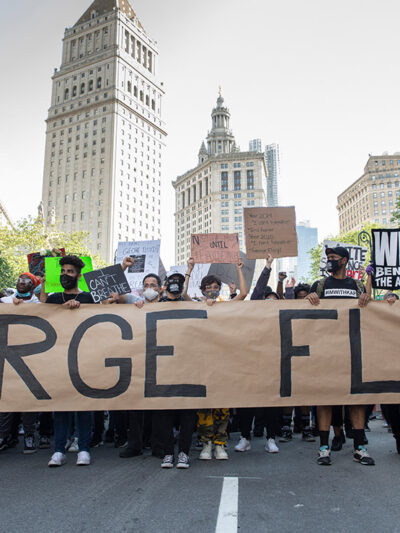
How State Governments Across the Country Failed to Protect Our Communities From COVID-19
Dylan Hayre, Justice Division Campaign Strategist, ACLU
Sinc
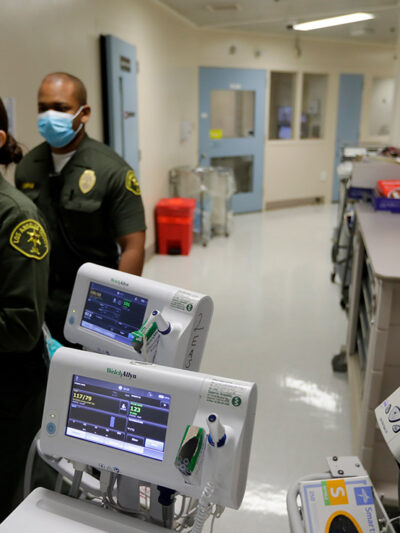
Taxpayers Shouldn’t Have to Fund Religious Education: How Today’s Supreme Court Decision Further Erodes the Separation of Church and State
Heather L. Weaver, Senior Staff Attorney, ACLU Program on Freedom of Religion and Belief
Today, in an
The EARN IT Act is a Disaster for Online Speech and Privacy, Especially for the LGBTQ and Sex Worker Communities
Kate Ruane, Former Senior Legislative Counsel, ACLU
Afte

Why Prosecutors Keep Letting Police Get Away With Murder
Somil Trivedi, Former Senior Staff Attorney, ACLU Criminal Law Reform Project
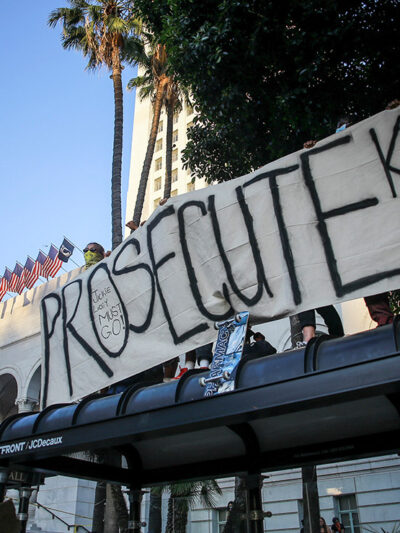
Protests, Aerial Surveillance, and Police Defunding
Jay Stanley, Senior Policy Analyst, ACLU Speech, Privacy, and Technology Project
For

“All Hell Broke Loose.”
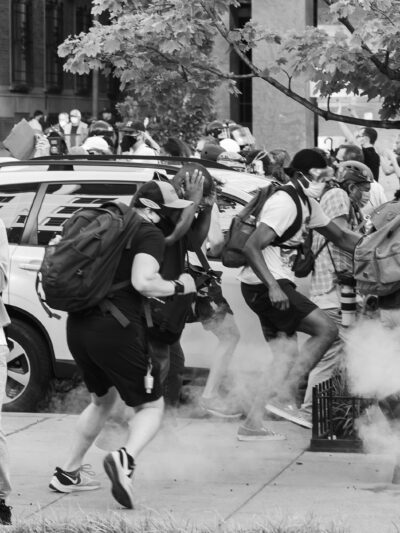
When Kishon McDonald saw the video of George Floyd’s murder at the hands of four officers from the Minneapolis Police Department, he could tell it was going to turn the country upside down. “I knew it was going to catch fire,” he said. McDonald, a former sailor in the U.S. Navy, watched over the following days as demonstrations against police brutality spread from Minneapolis to cities and towns across the country, eventually reaching Washington, D.C., where he lived. On June 1, he heard that people were planning to peacefully gather at Lafayette Square, a small park directly across from the White House, and decided to join them. By then, police had begun to attack and beat demonstrators in Minneapolis, New York, and others in states everywhere, escalating tensions as smaller groups broke into shops and set fire to police cars. But when McDonald arrived at Lafayette Square, he found a crowd of a few thousand people cheering, chanting slogans, and listening to speeches. Washington D.C. Mayor Muriel Bowser had imposed a 7 p.m. curfew after clashes the night before, but that was still an hour away. “Everybody there was like, it’s alright, we’re going to be here until 7 o’clock,” he said. “It was a very good energy.” It wouldn’t be long before that would change.

Stay Informed
Sign up to be the first to hear about how to take action.
By completing this form, I agree to receive occasional emails per the terms of the ACLU’s privacy statement.
By completing this form, I agree to receive occasional emails per the terms of the ACLU’s privacy statement.