
News & Commentary

Ending Indefinite Solitary Confinement for the Vast Majority of People with Death Sentences in Oklahoma
By Travis Handler
Latest Event
Not in My Name Coalition Meeting
Every Oklahoman must ask themselves not whether they support the death penalty, but rather: Do I trust the government with the power to kill its citizens—especially after catastrophic failures in the recent past?
Oklahoma's criminal legal system has failed to protect the innocent, those with serious mental health conditions, and individuals who have suffered adverse childhoods from execution. We cannot allow this to continue! Capital Punishment is racist, arbitrary, costly, and error-prone. It is time to end the death penalty once and for all.
The mission of the Not in My Name Coalition is to raise awareness, educate, and mobilize individuals and groups to take a stand against the use of capital punishment in the state of Oklahoma. Through our efforts, we strive to foster a culture of empathy by validating the humanity of people incarcerated on death row and advocating for their fundamental rights. Together, we declare, Not in My Name: we stand against the ultimate and irreversible act of state-sanctioned violence. Join the fight to end the death penalty in Oklahoma by becoming part of the Not in My Name Coalition. As a member, you will be informed of local events and rallies, gain a space to organize, and join a network of dedicated individuals who are committed to the work alongside you. Sign up now!
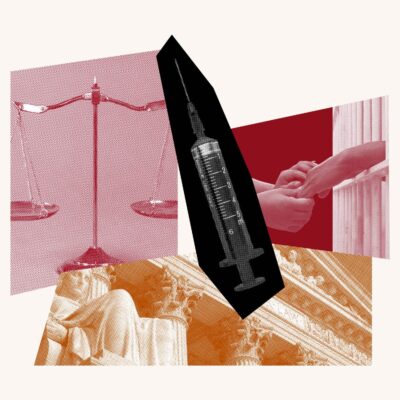

Defunding the Police Will Actually Make Us Safer
Paige Fernandez, Former Policing Policy Advisor, ACLU National Political Advocacy Department
This OpEd
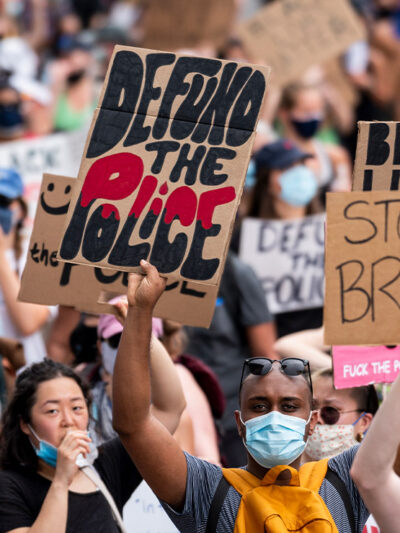
Why is it so Hard to Hold Police Accountable?
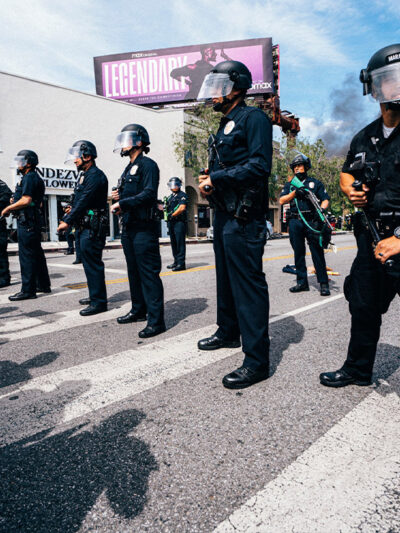
Police are supposed to “protect and serve” the community, but that’s a far cry from what modern-day policing often looks like in our country. The recent murders of Breonna Taylor, Tony McDade, George Floyd, and others highlight the need for drastic systemic change, yet again, as Americans across the country take to the streets in protest.
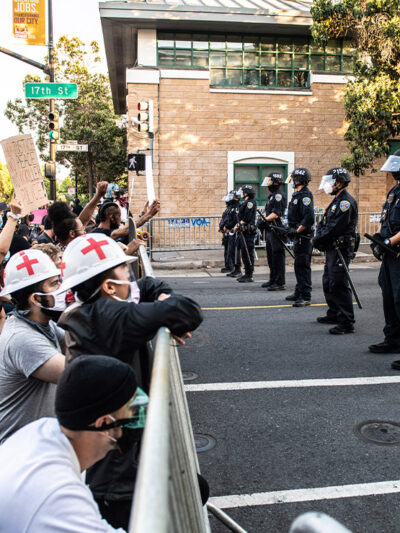
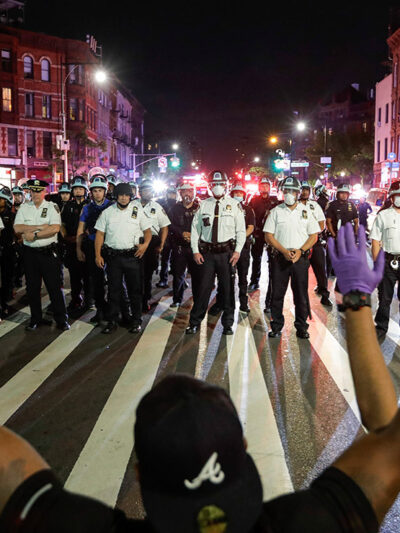
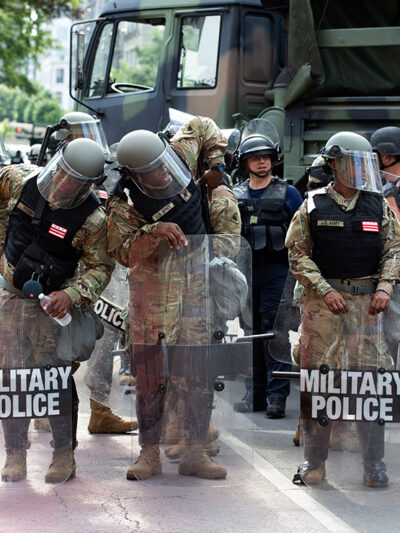
More Military Deployment and Terrorism Investigations are an Outrageous Response to Black Pain, Grief, and Anger
Hina Shamsi, Director, ACLU National Security Project
Acro
The Response to Protests Against Police Brutality is Not More Brutality
Vera Eidelman, Staff Attorney, ACLU Speech, Privacy, and Technology Project
Pride 2020 is About Resilience, and we are Resilient Together
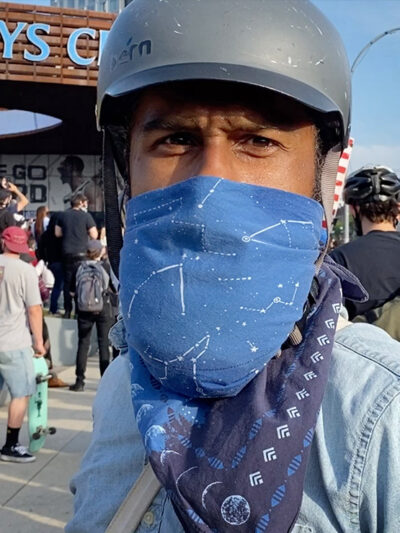
Pride has never been just about the parties. To the LGBTQ community, Pride is about staking our place in the world and speaking truth to power. It’s about making clear that we’re here, we belong, and we are resilient — resilient together. As our Trans Justice Campaign Manager LaLa Zannell has said: “For many Black and Brown queer and trans people, gathering in person has always come with a health and safety risk — including from law enforcement, and others who feel they have the right to harm us for simply being who we are … For many of us, this is not the first pandemic that shows the injustices in our health care, economic, and criminal justice systems.” Whether you’re celebrating Pride 2020 over Zoom, on the phone, or standing six feet apart from your friends donning rainbow masks — the message of Pride remains, and it’s stronger than ever. The history of Pride is rooted in the LGBTQ community responding to police violence and abuse of LGBTQ people and sex workers and those who fought back. This year, we’re showing what Pride means to us with a new Pride 2020 zine that sums up the year in LGBTQ rights, the meaning of pride to our community, profiles of trailblazers in trans rights including Aimee Stephens, and the fight ahead as we tackle sex work decriminalization, bans on trans athletes, attempts to license discrimination in the name of religon, and more. Plus, you’ll get a crossword, word search, a coloring book page, and more fun, socially distant ways to celebrate pride in 2020. This is how we stay resilient.

Know Your Rights While Protesting Police Brutality
The right to protest is fundamental to our democracy and enshrined in the First Amendment to the U.S. Constitution. In response to the death of George Floyd at the hands of Minneapolis police, people across the country have taken to the streets to demand racial justice and an end to police brutality and systematic racism against Black people.
Recidivism Will Only Decrease if Successful Reentry is Embraced as an Antidote for Mass Incarceration
Lewis Conway, Former National Campaign Strategist, American Civil Liberties Union
Whil

Reparations – Has the Time Finally Come?
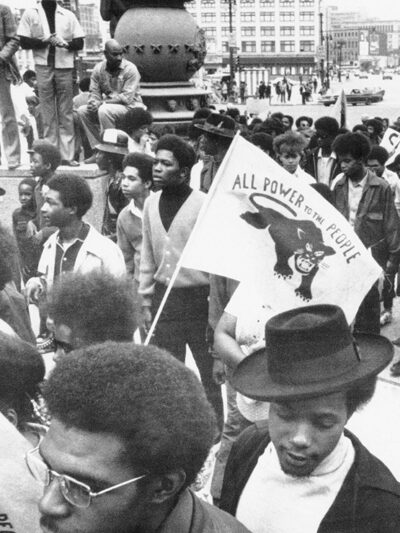
During a lull one afternoon when I was a high school student selling Black Panther Party newspapers on the streets of downtown Washington, D.C., in 1971, I sat down on the curb and opened the tabloid to the 10-point program, “What We Want; What We Believe.” The graphic assertion of “Point Number 3” particularly grabbed me:
Stay Informed
Sign up to be the first to hear about how to take action.
By completing this form, I agree to receive occasional emails per the terms of the ACLU’s privacy statement.
By completing this form, I agree to receive occasional emails per the terms of the ACLU’s privacy statement.